About
Neuromorphic computing is a computing paradigm inspired by biological neural systems. It is based on spiking, event-driven architectures in which memory and computation are closely integrated. Neuromorphic chips have already shown several promising advantages over conventional von Neumann architectures, particularly in terms of energy efficiency.
This workshop will explore the theoretical foundations of neuromorphic computing, with a focus on algorithms and computational complexity. Although the hardware has developed rapidly, the theory has not kept pace. Our aim is to create a forum for discussion on rigorous models of neuromorphic systems, allowing researchers to study their computational power and compare them with classical models of computation. These models must capture not only time and space, but also energy-related resources such as spikes and synaptic operations.
Venue
All talks will be held in the Ashton Lecture Theatre which is on the First floor of the Ashton Building, The University of Liverpool, Brownlow Street, Liverpool, L3 3GJ
The venue is a 15 minute walk from Liverpool Lime street (main train station).
Catering
Tea/coffee and lunch is provided to registered participants.
There will be a workshop dinner on the evening Time/Location TBC. All participants are welcome to attend, however non-speaking participants will have to cover the cost of their own meal.
Funding for Students
We urge all students to keep receipts for expenses as we may be able to refund some expenses after the conference.
Registration
Attendance at the Workshop on Theory of Neuromorphic Computing is free of charge. However, registration is required to help us with logistics, and to ensure adequate arrangements for the coffee/tea breaks.
Registration is now closedIt may still be possible to participate but without access to the pre-booked lunch or dinner (various options available near by), please contact the organisers to enquire.
Speakers
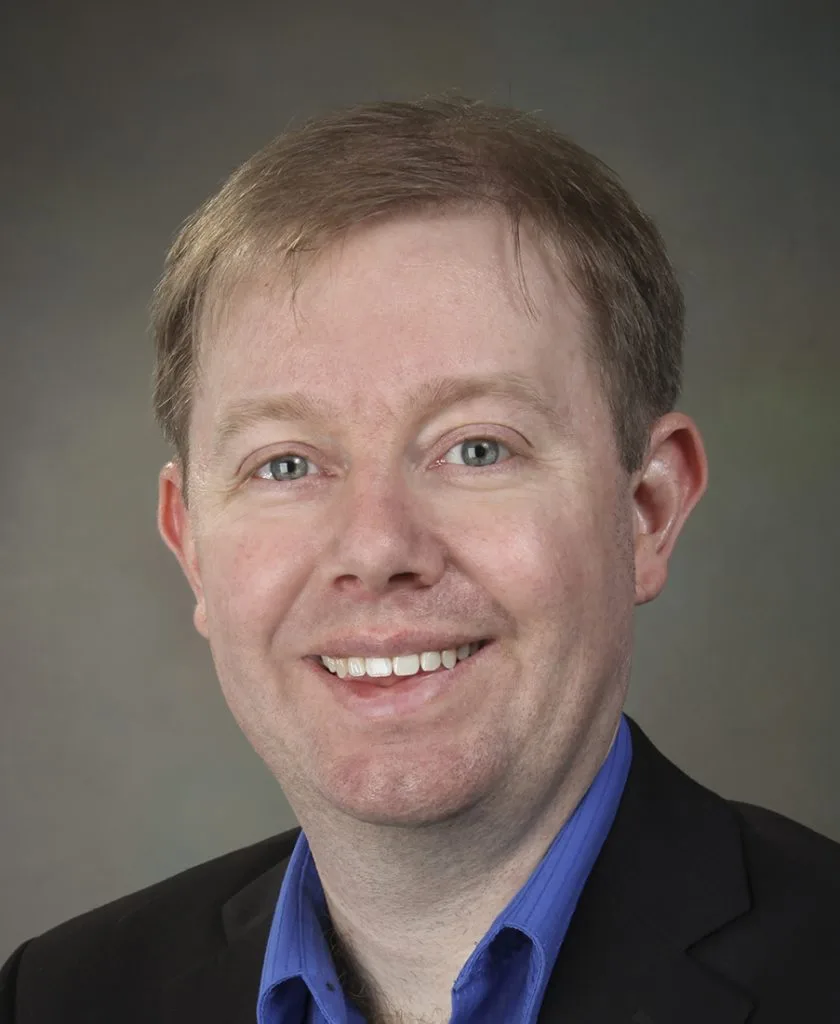
James Bradley Aimone
(Sandia National Laboratories)
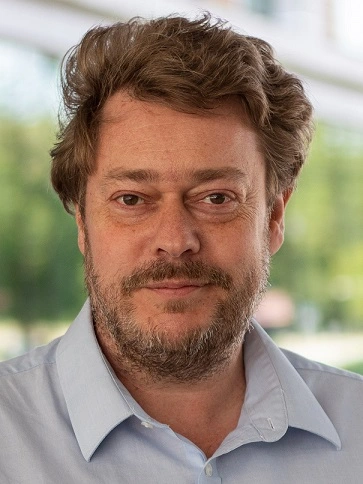
Johan Kwisthout
(Radboud University Nijmegen)
Johanna Senk
(Sussex)
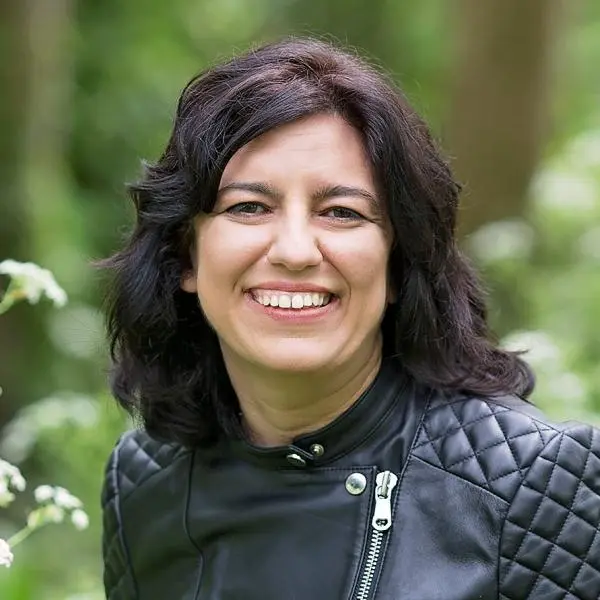
Eleni Vasilaki
(Sheffield)
Schedule
| Time | Activity |
|---|---|
| 10:00 - 10:45 | Coffee |
| 10:45 - 11:00 | Welcome Address |
| 11:00 - 12:00 | Johan Kwisthout - Structural complexity theory for neuromorphic computing |
| 12:00 - 14:00 | Lunch - Bertie & Bella's |
| 14:00 - 15:00 | Johanna Senk - The cortical microcircuit challenge: from neuroscience to neuromorphic computing |
| 15:00 - 15:30 | Brad Aimone (online) - A Theoretical Framework for Time, Space, and Energy Scaling of Neuromorphic Algorithms |
| 15:30 - 16:00 | Coffee Break |
| 16:00 - 17:00 | Eleni Vasilaki -Learning with Noise for Reliable and Scalable Neuromorphic Computing |
| 17:00 - 17:30 | Discussion and Open Problems |
| Dinner |
Talk Abstracts
Johan Kwisthout - Structural complexity theory for neuromorphic computing [Slides]
Neuromorphic computing is a new computational paradigm inspired by the energy-lean computations in the brain. In essence, most neuromorphic architectures adopt a spiking neural network model, either simulated in digital hardware (e.g., Intel Loihi or the Manchester Spinnaker model) or in analog circuits (e.g., the Heidelberg BrainScales model). While the obvious applications for these models are event-driven classification tasks on machine-learned circuits (such as anomaly detection), various researchers have also explored non-machine learning tasks, such as finding shortest paths or other graph problems. The temporal, event-driven nature of the spiking model nicely captures the canonical aspects of such tasks, and in some cases, can solve such problems either faster, with way less energy, or both. In this talk I present the basis for a structural complexity theory for spiking-based neuromorphic computing, where energy is a resource on par with time and space. We will look at several models of computation of increasing power and relate them to familiar machine models such as finite state automata, Turing machines, and boolean circuits.
Johanna Senk - The cortical microcircuit challenge: from neuroscience to neuromorphic computing [Slides]
The local circuitry of the mammalian brain is a focus of the search for generic computational principles because it is largely conserved across species and modalities. In 2014 a cortical microcircuit model was developed to analyse the structure and dynamics of this canonical circuit at full neuron and synapse density. Over time, the model has become a benchmark for large-scale neural network simulation and neuromorphic computing, putting simulation technologies and hardware platforms to the test. In this review [1], we trace how the model evolved from a theoretical framework for understanding cortex into a widely used benchmark that has driven advances in simulation speed together with a significant reduction in energy consumption. We also highlight lessons from this trajectory, demonstrate the new model repository [2], and discuss implications for future benchmarks in neuroscience and beyond.
[1] Senk et al. 2026 Neuromorph. Comput. Eng. 6 012001, https://doi.org/10.1088/2634-4386/ae379a
[2] https://github.com/INM-6/microcircuit-PD14-model
Brad Aimone - A Theoretical Framework for Time, Space, and Energy Scaling of Neuromorphic Algorithms [Slides]
This talk will present a theoretical framework for comparing the time, space, and energy scaling of neuromorphic algorithms against conventional stored-program execution. In the idealized parallel limit, neuromorphic time and footprint tradeoffs align with classical bounds for parallel algorithms, so there is no generic asymptotic time- or space-complexity advantage implied by being neuromorphic. In contrast, because neuromorphic energy is proportional to the realized execution trace (the cumulative neuron updates and synaptic communication events), there are explicit conditions under an event-count model for which neuromorphic energy will scale asymptotically lower than dense scheduled conventional execution. This distinction motivates several quantifiable metrics for identifying algorithm classes that are most advantageous with a neuromorphic approach.
To illustrate this framework, I will provide analysis of some case studies where neuromorphic algorithms demonstrate advantages. As the framework implies, we have demonstrated that a spiking algorithm for iterative mesh-based algorithms, which are common in finite element mesh simulations, can show strong neuromorphic performance, and we have also shown that the simulation of discrete-time Markov chains can exhibit a neuromorphic advantage. I will also show how the framework implies that dense linear algebra workloads, such as those common in many deep artificial neural networks, may be poorly suited for neuromorphic hardware. Together, these empirical and theoretical results begin to clarify a path forward for neuromorphic algorithm and architecture development.
Eleni Vasilaki - Learning with Noise for Reliable and Scalable Neuromorphic Computing [Slides]
Neuromorphic computing has broadened to encompass a wide range of approaches, from biologically inspired architectures to machine-learning systems implemented in unconventional physical substrates. While computing with materials is often motivated by the promise of energy efficiency, practical neuromorphic systems must also confront two central challenges: device variability and system scalability. In this talk, I will use stochastic magnetic and nanomagnetic devices as case studies to examine how variability affects learning, robustness and transfer to hardware. I will first discuss noise-aware learning rules that account for both the mean response and variance of device-level behaviour. I will then consider scalability in physical reservoir and physical neural-network systems, including overparameterisation, double-descent behaviour, and the use of digital twins to optimise interconnections when accurate mathematical models are unavailable. Together, these examples show how reliability and scalability can be approached as a joint problem of device modelling, learning, and system design.
Discussion
The discussion session included presentations on open problems. If you would like to include your slides here, or a quick summary of what you presented, please send them to the organisers.
Epifanios Baikas [Slides]
Stephen Coombes [Slides]
Organisers
David Purser
John Sylvester
Supported by